

Bringing a new puppy into your home is exciting, but it comes with the responsibility of providing proper care to ensure your furry friend grows up healthy and strong. Among the most important aspects of puppy care is nutrition. Puppies grow rapidly during their first year, and feeding them the right diet supports their muscles, bones, and overall development. Proper nutrition not only helps them thrive physically but also contributes to a strong immune system and long-term health.
If you’re a puppy parent in Weaverville, NC, understanding the essentials of puppy nutrition can make all the difference in your pup’s early growth and development.
Understanding Puppy Nutrition
Puppies have nutritional needs that differ significantly from adult dogs. Their bodies are developing quickly, so they require higher levels of protein, fat, vitamins, and minerals to support growth. Puppy food is specifically formulated to meet these requirements, whereas adult dog food may lack sufficient nutrients for young dogs.
Providing a diet tailored to your puppy’s age and size prevents future health issues such as joint problems, obesity, and weak immunity. Additionally, consistent nutrition helps your puppy develop good eating habits, which can influence their health throughout life.
Key Nutrients for Healthy Growth
Proper puppy nutrition depends on providing a balance of essential nutrients:
1. Protein
Protein is critical for building muscles, organs, and tissues. High-quality sources, such as chicken, lamb, or fish, ensure your puppy receives the amino acids necessary for strong muscle and organ development.
2. Healthy Fats
Fats provide energy, support brain and eye development, and maintain healthy skin and coat. Omega-3 and Omega-6 fatty acids are particularly important for cognitive growth and overall health.
3. Carbohydrates
Carbohydrates supply energy and aid digestion. Opt for digestible sources like brown rice, oats, or sweet potatoes, which provide sustainable energy for active puppies.
4. Vitamins and Minerals
Vitamins such as A, D, and E support vision, immunity, and bone health, while minerals like calcium and phosphorus are crucial for developing strong bones and teeth.
5. Fiber
Fiber helps maintain healthy digestion and prevents constipation, promoting a comfortable and efficient digestive system during early growth.
6. DHA
DHA, an omega-3 fatty acid found in fish oil, supports brain and eye development. Including DHA in your puppy’s diet enhances learning abilities and visual development.
Types of Puppy Food
Choosing the right type of food depends on your puppy’s needs, preferences, and lifestyle.
Dry Kibble
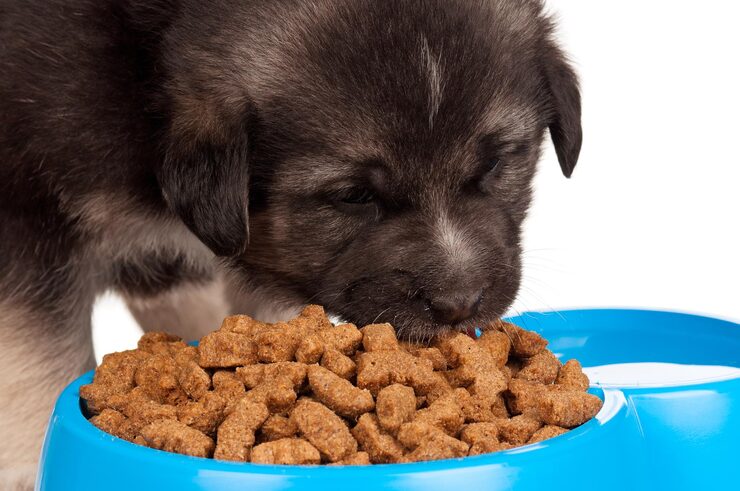
Dry kibble is convenient, easy to store, and helps reduce plaque buildup on teeth. Many formulations are tailored to different breeds and sizes, supporting healthy growth efficiently.
Wet Food
Wet food provides extra hydration and tends to be more palatable. It’s an excellent choice for picky eaters or puppies who need added moisture in their diet.
Raw Food
A raw diet may include raw meat, vegetables, and bones. While nutrient-dense, it requires careful planning to ensure all essential vitamins and minerals are included. Consult your veterinarian before starting a raw diet.
Homemade Food
Home-prepared meals allow you to control ingredients, but they must be carefully balanced to provide complete nutrition. Your veterinarian can provide safe recipes and portion guidance.
Feeding Guidelines
Feeding frequency and portion sizes are critical in puppy care:
- Under 6 months: Feed your puppy three to four times per day to match their high energy and rapid growth.
- After 6 months: Transition to two meals per day while monitoring portion sizes to prevent overeating.
Always follow the feeding instructions on the puppy food label, and adjust portions based on activity level, breed, and growth rate.
Tips for Choosing the Best Puppy Food
- Breed-Specific Formulas: Large breeds may need food that supports joint development, while small breeds may require nutrient-dense kibble for faster metabolism.
- Avoid Fillers: Foods with unnecessary fillers such as corn, soy, or by-products can lead to digestive issues.
- Check for AAFCO Certification: Ensure the food meets nutritional standards for growth and development.
- Consult Your Veterinarian: Your vet can recommend the best diet based on your puppy’s health, breed, and growth stage.
Signs Your Puppy Is Eating Well
A balanced diet will show positive results over time. Indicators of proper nutrition include:
- Healthy growth and steady weight gain
- Shiny coat and healthy skin
- High energy levels and playful behavior
- Firm stools and regular bathroom habits
If your puppy exhibits unusual weight loss, digestive issues, or low energy, consult your veterinarian immediately.
Common Mistakes in Puppy Nutrition
Even well-meaning puppy parents can make mistakes:
- Feeding adult dog food too early
- Overfeeding or underfeeding
- Ignoring specific breed dietary needs
- Skipping veterinary checkups for diet guidance
- Relying on table scraps or human food
Avoiding these mistakes ensures your puppy grows strong, healthy, and happy.
Local Considerations for Weaverville, NC
Puppy care in Weaverville, NC, comes with unique environmental factors, such as seasonal weather changes affecting hydration needs or local ingredient availability. Consulting with your veterinarian ensures your puppy receives the best nutrition tailored to your region.
Providing proper nutrition is essential for your puppy’s growth, health, and development. From selecting high-quality puppy food to monitoring portion sizes and consulting your vet, every decision plays a role in their well-being. By following this guide, you can help your puppy grow into a strong, happy, and healthy adult dog.
If you are in Weaverville, NC and need guidance related to puppy nutrition, book an appointment with Broad River Animal Hospital. Our experienced team is here to support your puppy’s healthy growth and development every step of the way.
FAQs
Q1. When should I switch my puppy to adult food?
Ans: Most puppies are ready to switch between 12-18 months, depending on breed size. Consult your vet to determine the best timing.
Q2. Can I feed my puppy adult dog food?
Ans: Adult food lacks essential nutrients for growth. Stick to puppy-specific formulas until your vet advises otherwise.
Q3. How much should I feed my puppy?
Ans: Portion size depends on age, breed, and activity level. Follow package instructions and consult your vet for precise guidance.
Q4. Is wet food better than dry food for puppies?
Ans: Wet food adds moisture and can be more appealing, while dry kibble supports dental health. A combination may be ideal.
Q5. Can I mix wet and dry food for my puppy?
Ans: Yes, mixing can provide variety and enhance palatability while meeting nutritional needs.
Q6. How do I know if my puppy is eating a balanced diet?
Ans: Signs include steady growth, a shiny coat, good energy, and normal digestion. Any irregularities should prompt a veterinary checkup.
Related Articles